
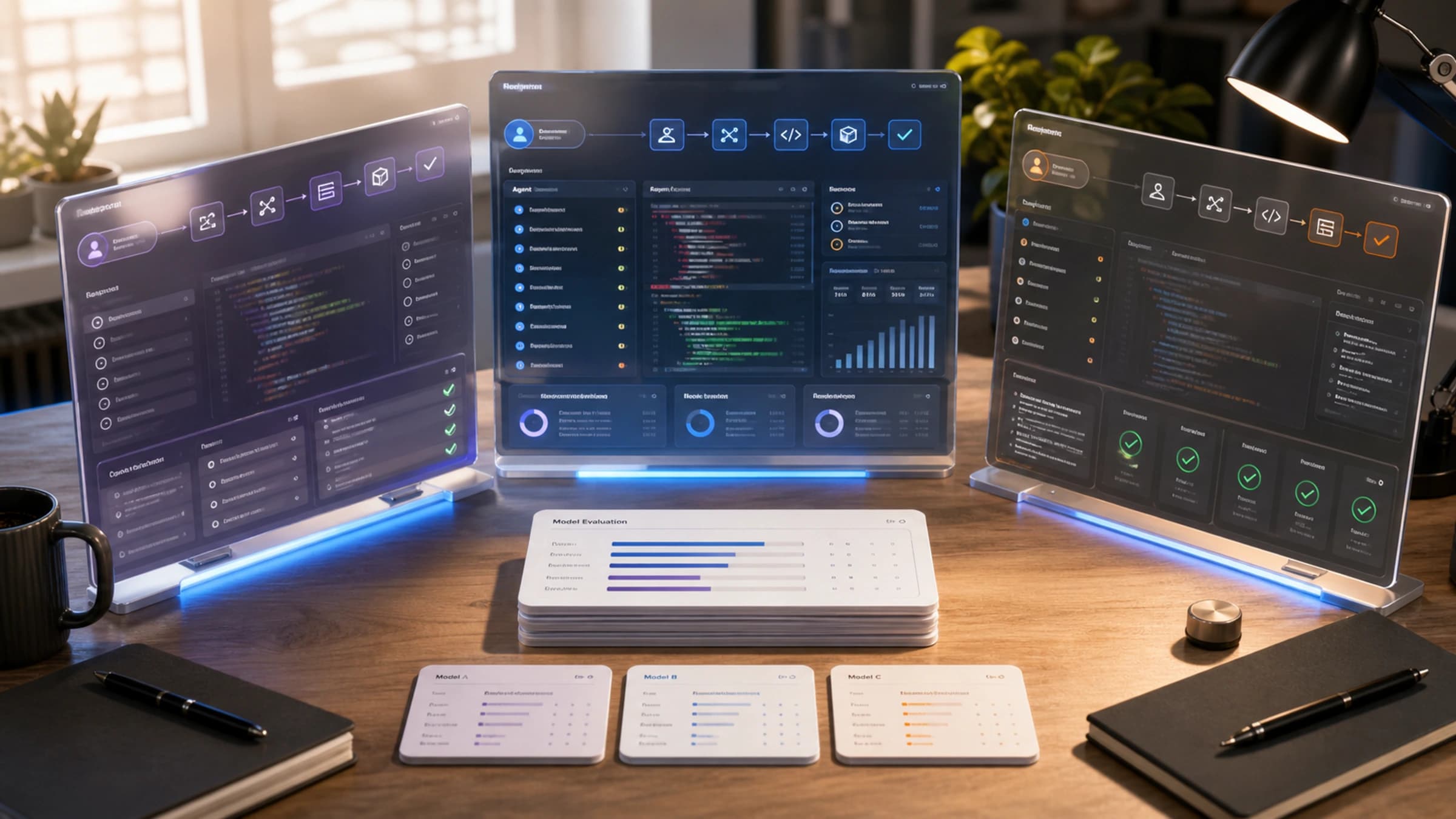
A coding model can suggest a fix. A coding harness can inspect the repository, run tools, edit files and show what happened. DeepSeek’s May 2026 hiring post suggested it wanted to build that second layer. Now DeepSeek Harness is in developer preview, so the useful question has changed: what does the released project actually offer, and how should developers assess it?
That May hiring signal has since become a public developer preview. DeepSeek now describes DeepSeek Harness as an open-source, plugin-based agent harness with a local web UI and developer documentation. Preview does not mean production stability: the official repository warns that compatibility-breaking changes can occur.
Did DeepSeek release a coding harness?
Yes. DeepSeek’s first-party Harness now has a public developer preview, source code and a documented way to run it. The original May news was a hiring signal; the current project is DeepSeek Harness. Whether it suits your workflow depends on its permissions, plugin quality, model choices, review experience and maturity, not on the existence of the preview alone.
What DeepSeek’s May hiring post revealed
Deli Chen, whose X profile describes him as a deep learning researcher at DeepSeek, posted that DeepSeek is "forming a new Harness team to build Code Harness from the ground up" and joked that it could be called "DeepSeek Code".
The post said the team is based in Beijing and linked to two recruitment pages:
- Harness Product Manager
- Harness R&D Engineer
Decrypt reported on the post on May 21, framing the move as DeepSeek building its own Claude Code-style product. The Decoder also covered the job push, saying DeepSeek is building a coding agent to compete with Claude Code, Codex and Cursor.
🚀 We’re hiring! DeepSeek is forming a new Harness team to build Code Harness from the ground up—may be you can call it DeepSeek Code or something like this hhh🤣🤣🤣 📍 Based in Beijing. Two roles open: 🧠 Harness Product Manager → https://t.co/vb3aWbYV9L 👨💻 Harness R&D…
View this post on X
DeepSeek Harness: confirmed facts and open questions
| Claim | Status | Evidence |
|---|---|---|
| DeepSeek is hiring for a Code Harness team | Strongly supported | Deli Chen's public X post links to two High-Flyer recruitment pages |
| The team is based in Beijing | Strongly supported | Stated directly in the X post |
| The roles are Harness Product Manager and Harness R&D Engineer | Strongly supported | Stated directly in the X post |
| The released project is named DeepSeek Harness | Confirmed by DeepSeek’s official developer preview | DeepSeek’s official product page uses the name DeepSeek Harness |
| Its workflow can be compared with Claude Code and Codex | A useful comparison, not a measured parity claim | Compare permissions, model choices, tools and task results directly |
| DeepSeek has launched a developer preview | Confirmed | DeepSeek’s official Harness page and public repository describe the preview |
| The developer preview is publicly available | Confirmed | The official quick-start and source are public; production support terms still need checking |
Why DeepSeek Harness matters for coding agents
The coding-agent market is quickly moving beyond chatbots and autocomplete. The main battle is now over full coding harnesses: tools that can read a repo, plan changes, edit files, run commands, inspect errors and continue work across multiple steps.
That is why this report matters. With DeepSeek now offering its own harness, it competes beyond model supply at the product layer. It competes at the product layer where developers actually work.
The preview puts DeepSeek alongside products such as:
| Product | Company | What it does |
|---|---|---|
| Claude Code | Anthropic | Agentic coding tool that reads codebases, edits files, runs commands and works across terminal and development environments |
| Codex CLI | OpenAI | Lightweight coding agent that runs in the terminal |
| Cursor | Anysphere | AI-native code editor with codebase-aware chat and agentic coding workflows |
| OpenHands | All Hands AI | Open-source software engineering agent platform |
| Devin-style tools | Cognition and others | Autonomous software engineering agent products with planning, execution and task tracking |
DeepSeek already has brand recognition among developers because of its reasoning and coding models. A first-party coding harness gives it a direct channel to those users.
Why the harness layer matters beyond model benchmarks
DeepSeek Harness extends the company’s reach from models into the workflow layer.
A model can power many tools, but an agent harness owns the workflow. It decides:
- how the model sees a codebase
- what commands it can run
- how it edits files
- how it handles context
- how it asks for human approval
- how it stores task state
- how it recovers from errors
- how it measures success
For developers, that product layer is often more important than raw benchmark scores. A slightly weaker model in a better harness can feel more useful than a stronger model in a weak workflow.
Could DeepSeek Harness compete on cost?
DeepSeek's obvious advantage is cost. Its models have been associated with aggressive pricing and broad API compatibility. Decrypt argues that a DeepSeek-native harness could use that cost position to challenge premium coding products.
That claim should be treated carefully because product pricing has not been announced. But the broader logic is sound: coding agents can consume a lot of tokens. They read files, generate plans, inspect logs, retry failed commands and revise code. Lower inference cost can matter.
| Factor | Why it matters for coding agents |
|---|---|
| Token cost | Long coding sessions can use large amounts of context and output |
| Latency | Developers notice slow planning and command loops quickly |
| Context handling | Repo-level work needs large and well-managed context windows |
| Tool execution | The harness must safely run commands, edit files and inspect results |
| Reliability | Developers need the agent to finish tasks, not just produce plausible code |
| Trust | File edits and terminal commands require clear approval and rollback controls |
If DeepSeek pairs suitable models with a reliable harness, it could pressure the economics of Claude Code, Codex and other paid agentic coding tools.
What its Beijing origins mean for developers
The Beijing location also matters. DeepSeek Harness is a strategic AI developer tool from one of China's most closely watched AI labs. That makes the story bigger than another coding assistant launch.
The likely implications:
- China-based developers may get a domestic alternative to US-led coding agents.
- DeepSeek could reduce dependence on Western agent platforms.
- The company could turn model adoption into product adoption.
- US and Chinese AI ecosystems may diverge further at the tooling layer, not just the model layer.
That May evidence supported a hiring and development story. The later official developer preview establishes that a product now exists. Its released feature set and maturity should be judged from the project documentation and hands-on testing.
What the developer preview actually includes
DeepSeek says the harness uses an “everything is a plugin” architecture: model connections, tools, sessions, sandboxes, storage, loops and even the interface can be composed through plugins. Its official page describes a standard coding mode, a code-orchestration mode, a minimal benchmark mode and a creator mode for building presets. It also describes an append-only session log intended to make runs inspectable. These are product claims worth verifying with a small repository before granting broad access.
Try a bounded task first: ask it to fix a failing test in a disposable branch. Check which files it can read, whether tool calls are visible, what approval controls exist before writes, whether the final diff matches the request and whether the test evidence is reproducible. A fast patch is less valuable if its tool history and permissions are hard to inspect.
What developers should test in DeepSeek Harness
The important missing details are substantial:
| Unknown | Why it matters |
|---|---|
| Product name | The public project is named DeepSeek Harness; “DeepSeek Code” was an early joke |
| Release date | Developer preview is live; no stable-release date is established here |
| Supported environments | The official quick-start runs a local web UI; check docs for other surfaces |
| Model backend | Its plugin architecture supports model selection; verify configured backends |
| Pricing | No subscription or usage pricing is public |
| Permissions model | Coding agents need strong controls for shell commands, file edits and secrets |
| International availability | DeepSeek says the developer preview is available worldwide |
| Open-source status | The source is public under the MIT licence |
These questions now concern preview maturity, rather than whether a product will appear.
What to watch as DeepSeek Harness matures
The next signals will show whether the preview becomes dependable for daily work.
Watch for:
- a stable-release announcement and support policy
- documentation updates for DeepSeek Harness
- repository releases and breaking-change notices
- IDE, terminal or MCP integration references
- job listings that mention agent loops, context engineering, sandboxing or command execution
- demos from DeepSeek employees
- pricing, support or hosted-service terms
- Chinese developer community testing
Watch for stable releases, documented controls and independent reports from teams using it on real repositories.
Should developers try DeepSeek Harness now?
DeepSeek has moved beyond a coding model with a public agent harness preview. That is the substantive shift since the May hiring story.
The May hiring post correctly signalled a move from supplying models to building the workflow around them. The preview now gives developers something concrete to assess: plugin configuration, traceability, permission controls and the quality of a reviewed coding task.
DeepSeek has entered the coding-agent market; whether its harness is a better fit than established tools still needs a matched task, a cost check and a review of its evolving preview APIs.